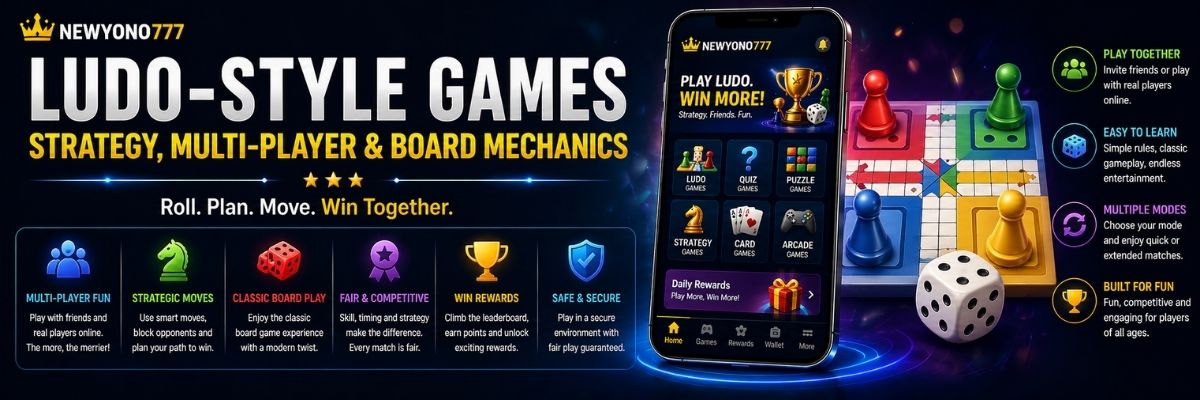
What Are Ludo-Style Games?
Ludo-style games are board-format titles built around turn-based round structures, token or piece movement across a defined playing area, and tactical positioning against one or more opponents. The rules are typically simple to learn, but the strategic depth emerges from the interactions between player decisions over multiple turns. This accessible complexity makes ludo-style formats one of the most widely played categories in mobile skill-based gaming.
As part of the broader Skill-Based Games family, ludo-style formats reward players who develop strong positional instincts, understand turn-order advantages, and adapt their route choices based on current board state. Unlike formats such as Quiz Games that reward static knowledge, ludo-style skill is dynamic and situational — the right move depends entirely on current context.
Turn Order and Tactical Timing
Turn sequencing is the primary skill layer in ludo-style formats. Each player acts in order, and the value of any given action changes depending on what opponents have done before it. Strong players develop a clear sense of timing — knowing when to advance aggressively, when to adopt a defensive route, and when to wait for a more favourable position to develop.
This timing awareness is directly comparable to the planning horizon required in Strategy Games, but in ludo-style formats it operates within a tighter turn window and with more visible board feedback. The visual clarity of board positions makes ludo-style an excellent entry point for players building their first structured tactical habits.
Route Selection and Board Control
Route selection is the second major skill dimension in ludo-style play. Most formats offer multiple paths toward the goal state, each with different risk profiles and positional benefits. Choosing routes that minimise exposure to opponent actions while maintaining forward progress is a learnable skill that improves noticeably over 20-30 sessions of deliberate practice.
Board control — maintaining positions that limit opponent options while preserving your own — is the advanced layer that separates consistent players from those who rely on favourable outcomes. Studying how Puzzle Games approach constraint management provides useful mental models for route planning in ludo-style contexts, since both require thinking about available moves several steps ahead.
Building a Consistent Playing Routine
Consistent improvement in ludo-style formats comes from regular, deliberate sessions combined with end-of-game review. After each session, identify the two or three turns where the outcome could have been improved with a different choice. Note whether the error was a misread of board position, a timing mistake, or a route selection error — each of these categories requires a different type of practice to address.
Short sessions of 20-30 minutes tend to be most productive for ludo-style practice, as this length accommodates one or two complete games with enough board complexity to encounter meaningful decision points. The Responsible Play guide provides a broader framework for structuring game sessions across all formats, including ludo-style, in a sustainable daily routine.
Ludo-Style Compared to Other Skill-Based Formats
Compared to other skill-based categories, ludo-style games offer the most visually transparent feedback on decision quality. Every move produces an immediately visible board state change, which makes it easier to evaluate the quality of each decision in real time. This visual clarity is one reason ludo-style formats are popular as introductory skill-based games — the feedback loop is tight and immediate.
In contrast, Mind Games focus on internal cognitive processes with less visible moment-to-moment feedback, and Strategy Games often have longer delay between action and consequence. Mobile Entertainment Games frequently feature ludo-style formats as core offerings because their touch-screen board interfaces translate well to portable devices.
Guides and Resources on Newyono777
The Newyono777 ludo-style games guide is part of a complete eight-category skill-based games library. Each guide covers the format's core mechanics, the skill layers involved, session structure recommendations, and connections to related game categories. The site provides informational content only — no game recommendations, downloads, or promotional content.
Visit the Blog for longer-form articles on ludo-style session planning and tactical development, and the FAQ for quick answers to common questions about the format. The Skill-Based Games overview is the best starting point if you are new to the category library.
Frequently Asked Questions
What skills does ludo-style gaming develop?
Ludo-style gaming primarily develops positional thinking, turn-timing awareness, route planning, and adaptive decision making. These skills transfer well to other board-format games and provide a useful foundation for more complex strategy formats. The visual feedback of board positions makes it an effective learning environment for tactical reasoning.
How long are typical ludo-style game sessions?
A single ludo-style game typically takes 15-30 minutes depending on the number of players and format complexity. Skill-focused practice sessions of two to three games (30-45 minutes) allow enough decision points to identify and work on specific tactical patterns without causing attention fatigue.
Can ludo-style games be played in short windows?
Yes — many ludo-style mobile formats support 10-15 minute sessions, making them well suited to short practice windows. Free-to-Play Games often include ludo-style formats that can be paused and resumed, making them accessible for players with irregular session schedules.
Explore More Game Categories
Skill-Based Games
The full overview of skill-first game formats and progression habits.
Strategy Games
Planning-heavy sessions with layered tactical decision making.
Puzzle Games
Logic-first formats built around sequence and pattern tasks.
Mind Games
Focus and memory-centered rounds for sustained attention.
Free-to-Play Games
Accessible titles across multiple skill-based categories.
Mobile Entertainment
Portable game formats for flexible session lengths.