Overview
Many players notice declining results late in long sessions but continue playing anyway. Planned breaks solve this by preserving focus before fatigue becomes costly.
A responsible break schedule helps you stay in control of time, mood, and decision quality.
This guide explains how to design break intervals that support both healthy play and better outcomes.
Why Breaks Improve Performance
Mental fatigue reduces pattern recognition, timing, and risk assessment. Short breaks reset cognitive load.
When you pause intentionally, you return with clearer judgment and fewer impulsive mistakes.
Break discipline is one of the easiest ways to improve long-session consistency.
Recommended Session Rhythm
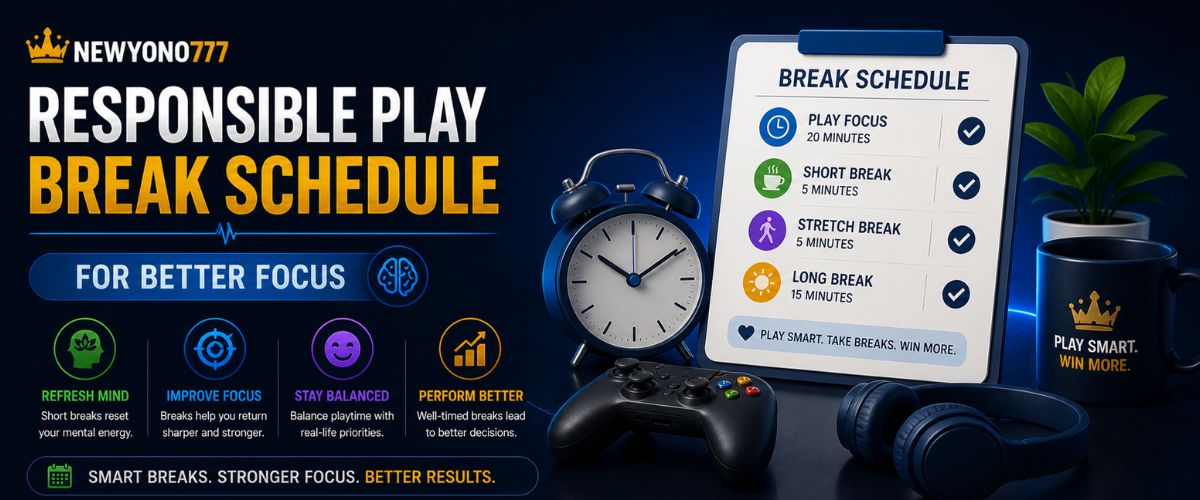
Use a 25/5 rhythm for medium-focus sessions: 25 minutes active play, 5 minutes off-screen.
For high-intensity categories, use 20/5 cycles and cap total rounds based on your daily schedule.
If performance drops sharply, switch to recovery mode: one break cycle plus low-pressure review.
Pre-Session and Stop Rules
Define your stop time before starting. A clear endpoint prevents unplanned extension.
Set two warning rules: consecutive low-focus moments or repeated avoidable errors.
When a warning triggers, pause immediately and reassess goals before continuing.
Balance, Not Restriction
Responsible play is about balance and sustainability, not reducing enjoyment.
Structured breaks let you stay engaged while protecting health and concentration.
Balanced routines are easier to maintain and support steady long-term improvement.
Internal Resources to Pair With
Use Responsible Play as the foundation and App Information for practical environment setup.
Combine with Daily Skill Routine so your breaks align with session structure.
If you track tactical outcomes, add Strategy Decision Journal to connect pacing with results.
Practical Session Checklist
- Set stop time before session starts.
- Use a fixed work/break rhythm.
- Define warning signs for fatigue.
- Pause immediately when warning signs appear.
- Review outcomes after each cycle.
FAQs
How long should each break be?
A 5-minute off-screen break works well for most sessions. Longer sessions may benefit from one 10-minute recovery break.
Can breaks reduce my session progress?
Usually the opposite. Breaks improve clarity and reduce costly mistakes, which supports better overall progress.
What should I do during breaks?
Step away from the screen, hydrate, and reset posture. Avoid consuming fast-paced content that keeps mental load high.
How do I know if my schedule is effective?
Track post-break performance quality. If your decisions improve after breaks and fatigue errors fall, the schedule is working.