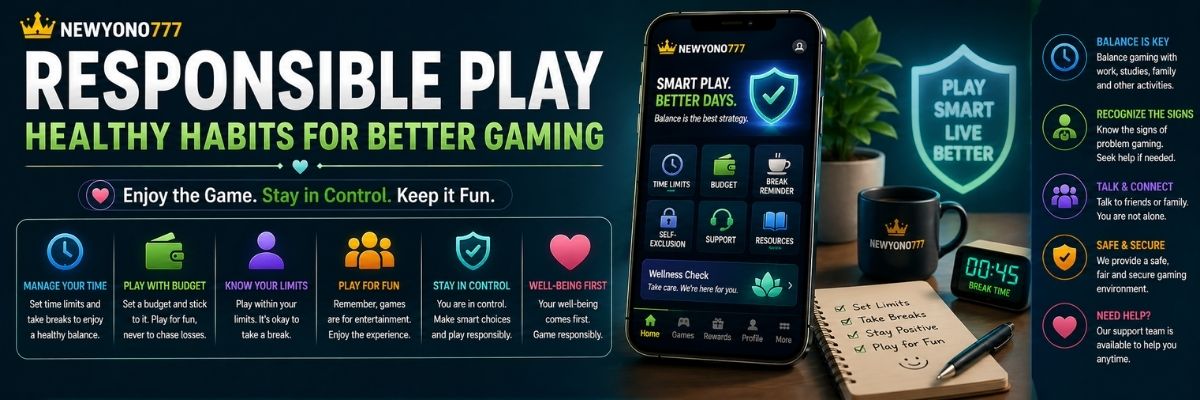
What Is Responsible Play?
Responsible play is a personal framework for managing how you engage with game sessions over time — covering session length, break frequency, daily schedule balance, and recognition of unsustainable patterns. It is not about restriction for its own sake; it is about sustainability. Players who manage their sessions deliberately tend to enjoy their chosen formats for longer, improve more consistently, and experience fewer negative side effects from extended play.
The principles of responsible play apply equally across all skill-based game categories — whether you are engaged with Quiz Games, Puzzle Games, Strategy Games, or any of the other formats covered on this site. The session management habits described in this guide are format-independent and complement any game-specific improvement approach. The Skill-Based Games overview explains how deliberate practice within well-managed sessions produces the best long-term outcomes.
Setting Session Windows Before You Start
The most impactful responsible play habit is pre-session planning: deciding when a session will start and when it will end before opening the game. Players who set a definite stop time before starting are significantly more likely to honour it than those who intend to stop at an unspecified future point. The decision to continue is much harder to make clearly once a session is underway and engagement is high.
Practical pre-session planning takes less than a minute: check the time, decide how long you want to play, set a phone timer or calendar reminder for the end point, and start the session. This removes ambiguity about when to stop and makes honouring the planned end point a straightforward action rather than a willpower test. The App Information guide covers device setup steps that support this approach, including notification settings that keep session interruptions minimal until the planned end point.
Break Routines That Support Focus
Structured breaks within longer sessions produce better overall quality than continuous play without interruption. A 5-minute break every 45-60 minutes is a widely effective interval for maintaining concentration across multi-hour game routines. During a break, stepping away from the screen, moving briefly, and allowing the mind to rest — rather than switching to another screen-based activity — produces the most effective cognitive recovery.
Break routines matter most in formats that demand sustained attention: Mind Games, complex Strategy Games, and longer Puzzle Games sessions all benefit significantly from structured breaks. Players who skip breaks in these formats typically report a noticeable drop in decision quality during the second half of their session, which undermines the skill development value of the additional time played.
Balancing Game Time With Daily Life
Sustainable game routines exist within a broader daily structure that includes work or study, physical activity, social time, and adequate sleep. Game sessions that consistently displace sleep, exercise, or social commitments tend to produce increasing dissatisfaction over time, even if the individual sessions are enjoyable. The goal is a game routine that complements daily life rather than competes with it.
A useful planning approach is to identify the time blocks genuinely available for game sessions each week — not the time you would like to have, but the time that does not require displacing something else. Building sessions into these defined windows produces a stable, sustainable routine. Free-to-Play Games often support this approach well because their session length flexibility accommodates varied available time blocks.
Recognising Unsustainable Play Patterns
Several common patterns indicate a game routine has become unsustainable. Consistent session overrun — regularly playing significantly beyond planned stop times — suggests the pre-session planning habit needs reinforcement. Skipping planned breaks because the game is at a critical point is a similar signal. Feeling irritable or unsatisfied when a session ends on time, rather than complete and content, is worth noting as a possible sign of over-reliance on game sessions for mood regulation.
None of these patterns require alarm — they are common experiences that respond well to practical adjustments. Reinstating a firm session limit for a week, building non-game activities into the daily routine, or switching temporarily to shorter-session formats like Mobile Entertainment Games can re-establish a healthier balance. Most players find that a recalibration period of one to two weeks is sufficient to restore a comfortable, sustainable routine.
Responsible Play Resources on Newyono777
The Newyono777 responsible play guide is part of the site's broader informational coverage of skill-based gaming practices. The guide is designed to complement the category-specific skill development content on the site by providing the session management framework within which deliberate practice produces the best results. Responsible play and skill development are not in tension — they are complementary elements of a complete approach to skill-based gaming.
The FAQ answers common questions about session management and responsible play practices. The Blog includes longer articles on session planning, break routine design, and building sustainable game habits. The blog post Responsible Play Tips provides a practical, action-oriented complement to this guide page.
Frequently Asked Questions
How long is a healthy game session?
There is no single universal answer, as appropriate session length varies by format, age, and individual attention capacity. As a general guide, sessions of 30-60 minutes with a structured break in the middle are sustainable for most adults across most skill-based formats. Sessions that consistently run beyond 90 minutes without breaks benefit from a more deliberate planning structure.
What is session creep and how do I avoid it?
Session creep is the gradual extension of play sessions beyond their planned end points, driven by the momentum of active engagement. The most effective prevention is setting a definite end-time reminder before starting — a timer or alarm that triggers when the session should close. Players who set this reminder before opening the game are significantly more likely to end on time than those who rely on checking the clock manually.
Where can I read more about balanced play routines?
The Responsible Play Tips blog post provides practical, specific advice on daily routine design. The FAQ covers the most common responsible play questions across all skill-based game formats. For format-specific session habits, each category guide includes a dedicated section on session length and practice structure.
Explore More Guides
Skill-Based Games
The full overview of skill-first game formats and progression habits.
Mind Games
Focus and memory training with structured attention routines.
Free-to-Play Games
Accessible titles across multiple skill-based categories.
Mobile Entertainment
Portable game formats for flexible daily session lengths.
App Information
Device setup and compatibility checks for mobile games.
FAQ
Quick answers to common questions across all categories.